How to Color-Code a Shared Travel Map: One Pin Color per Person
One pin color shows where you've been. A color for each person shows who went. Here's how to set up a key that still makes sense five years from now.

To color-code a travel map, give each person their own pin color for the trips they took without the others, add one more color for trips you took together, write the key down before the first pin goes in, and make the color you'll use most the one that shows up best on your map.
A map with one color of pins shows where you've been. A map where each person has their own color shows who went. That second map starts conversations the first one can't: the trips you each took before you met, the summer one of the kids went abroad without you, the year everyone finally made it somewhere together.
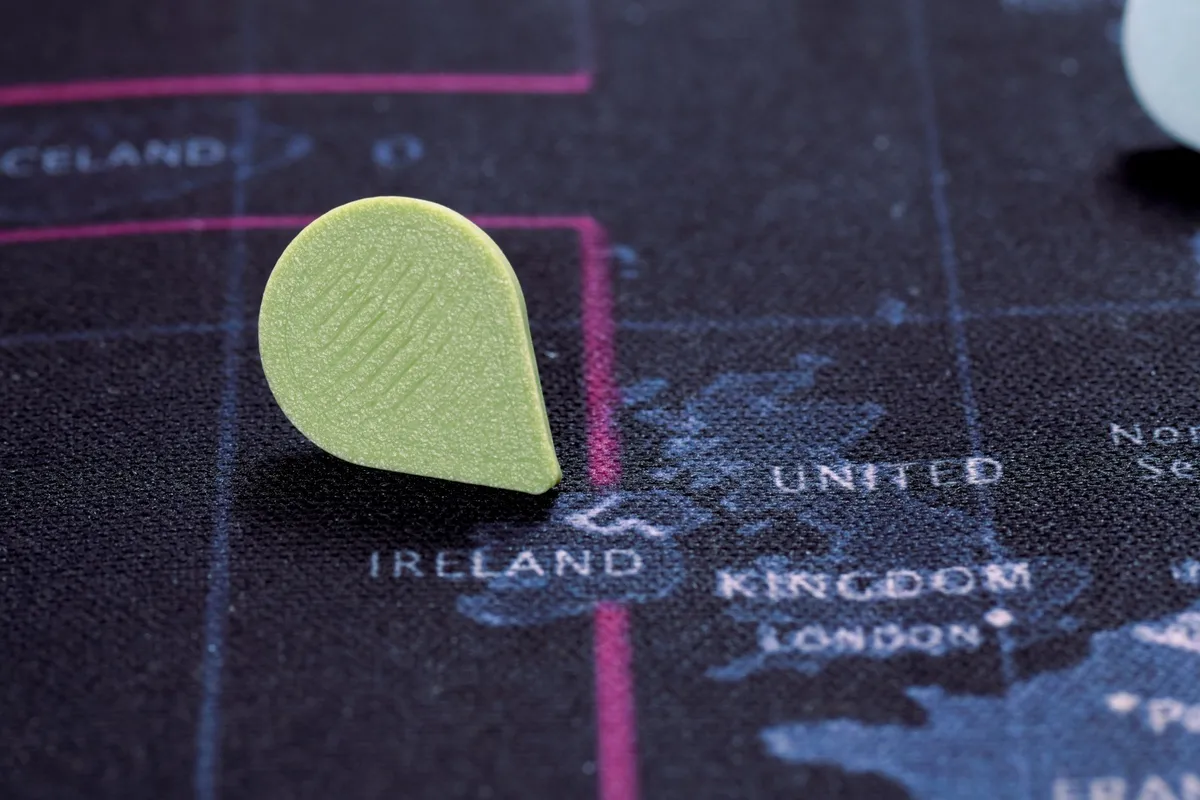
Setting one up takes about ten minutes, and most of that is deciding on the key. Below is how we'd do it, with example keys for couples, families and friends. We sell pins in the six colors pictured above, but everything here works with whatever pins you have; when we mention our pins below, we say so.
The short version
- Give each person one color for their own trips.
- Add one color for trips you took together, and make it the easiest to see on your map: a dark color on a light map, white or a light color on a dark one.
- Optionally add a color for places you've lived or places you plan to go.
- Write the key on a small card next to the map.
- Use one pin per place, not per visit, and two pins side by side when two people went separately.
The idea: one color per person, plus one for together
Give each person a color for the trips they took without the others. Then pick one more color for the trips you took together. If we did it for the two of us, Todd would be brown, Hannah would be green, and every trip we've taken as a couple would be white:
- Todd's tripsSedona Brown
- Hannah's tripsCongo Green
- Trips we took togetherAlpaca White
Once the pins are in, the map explains itself. On a couple's map, the brown and green pins are mostly the years before they met, and the white ones are everything since. Guests can read that without anyone explaining it.
Example keys
For a couple
Three colors, as above. Some couples add a fourth for places they've lived, which keeps a hometown or a year abroad from looking like a vacation.
For a family
One color per person and one for trips the whole family took. Kids love having a color that's only theirs, and a pin for the school trip or summer camp they went on alone.
- All of usAlpaca White
- DadSedona Brown
- MomCongo Green
- Our oldestNordic Ice Blue
- Our youngestDelhi Sunset Orange
Our family travel map guide covers the rest of the setup, including how high to hang it when the kids are small.
For friends who travel together
A shared map works for a group that takes a trip every year: each friend gets a color for their own travels, and the group trips get the together color. It makes a good gift for whoever always plans the trip, and it gives the group a reason to see the map at every reunion.
Colors that aren't people
You can also give a color to something other than a person. Two that work well:
- Places we've lived. Hometowns, college towns, a year abroad. Pins in this color tell a different story from the trips.
- Next trips. Places you've booked or keep talking about. When you go, swap the pin for one in the right person's color. Our bucket list guide has more on keeping a "next" color.
Our pins come in six colors, so a key can cover five people plus a together color, or fewer people plus one of these.
Pick colors that show up on your map
This is the step people skip. The same pins look completely different on a light map and a dark one, and the color you'll use most needs to be the easiest to see.
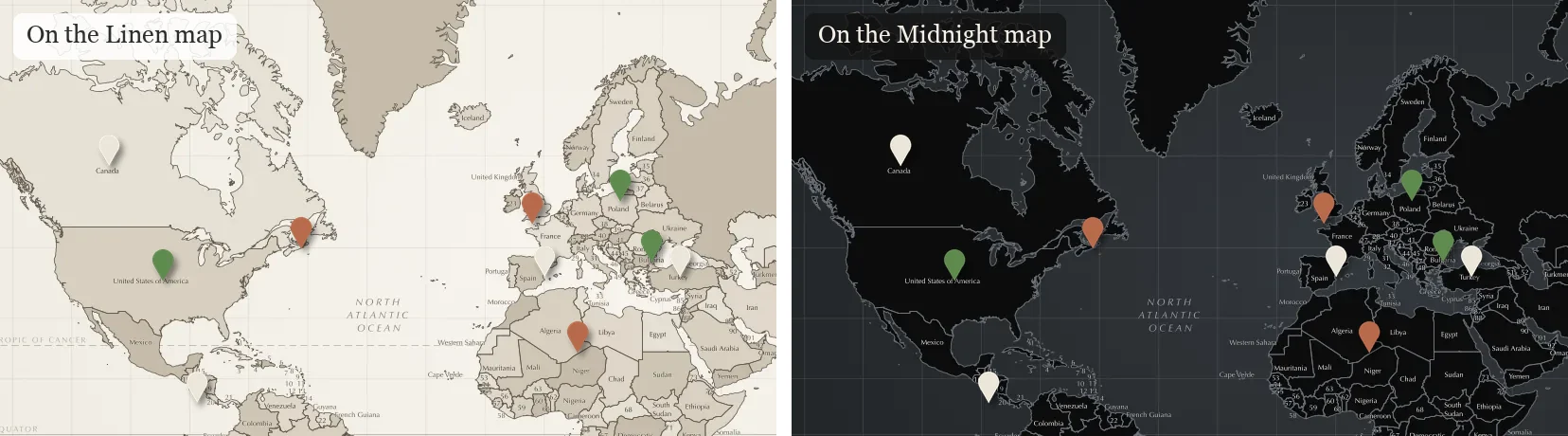
- On a light map, like Linen, make the together color a dark one: Sedona Brown or Congo Green. Save Alpaca White and Nordic Ice Blue for the people with fewer pins.
- On a dark map, like Midnight, white and Ice Blue are the brightest pins you can use, so either makes a good together color.
- Avoid two greens for two people unless the map is big. Congo Green and Irish Clover Green are easy to tell apart up close and harder from across the room.
Four rules that keep the key readable
- Write the key down before the first pin goes in. Tape a small card to the bottom corner of the map, or pin one beside it. Nobody remembers in two years whether green meant Mom or the trips to Grandma's.
- Decide what "together" means. If three of four of you went, is that a together pin or three separate ones? Either rule works. Pick one and use it every time.
- Two people, same place, different trips: two pins. If you'd both been to Paris before you met, Paris gets a brown pin and a green one side by side. That pair is often the best story on the map.
- One pin per place, not per visit. A city you've been to five times still gets one pin. Otherwise the places you go most turn into a pile.
The color shows who went. The pin can show what happened.
A color key answers "whose trip is this?" Our Touch-to-Travel pins answer the next question too. Each one holds an NFC chip, so anyone who holds a phone to the pin sees that trip: the dates, the story, and with the Globetrotter Club, the photos, the videos and a song from that week. No app needed.
This white pin is a trip we took together, the one where we got engaged:
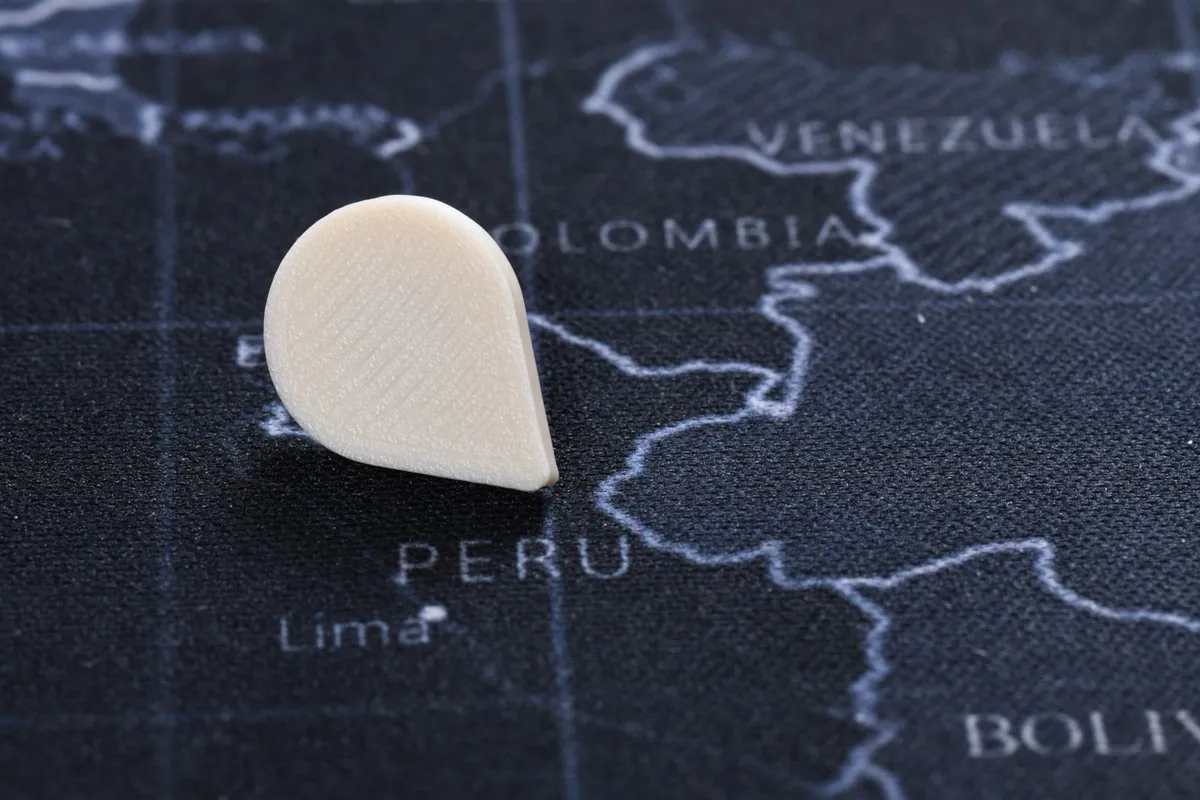 1. Tap the pin with a phone
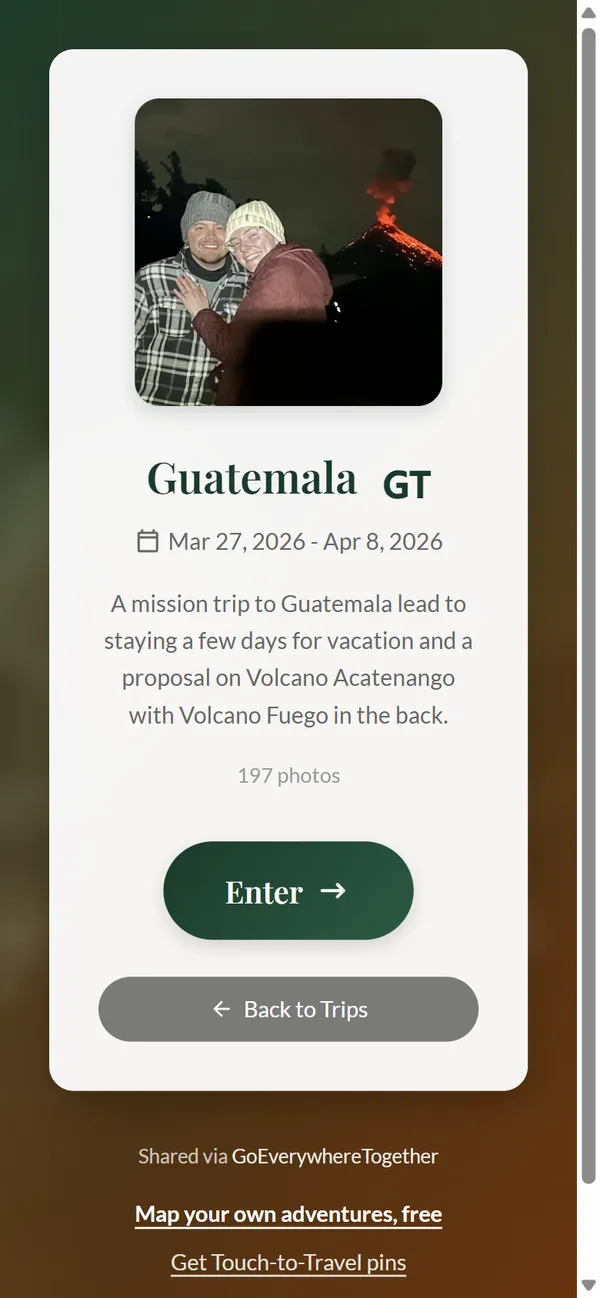 2. The trip opens in the browser
On a color-coded map that pairs well. Guests read the colors from across the room, walk up, and tap the pins they're curious about.
How many pins you'll need
Count the places for each person and for the together color, then round up for the next couple of years. Touch-to-Travel pins come in sets of 6 or 12 of one color, or a mixed set, from $27. Get the together color in the bigger set, since it's the one you'll keep adding to.
Quick answers
How do you color-code a travel map?
Give each person a pin color for their own trips, add one color for trips taken together, and write the key down. Pick the together color so it stands out on your map, since it's the one you'll add to most.
What do different colored pins mean on a travel map?
Whatever you decide, as long as you write it down. The most common keys are one color per person, a color for trips taken together, a color for places you've lived, and a color for places you plan to go.
How do you color-code a travel map for a couple?
Use three colors: one for each person's own trips and one for trips you took together. On a light map, make the together color the darkest of the three so it's easy to see.
How many pin colors do you need for a family map?
One per person, plus one for trips the whole family took. A family of four needs five colors.
What if two people went to the same place on different trips?
Give the place a pin in each person's color, side by side.
Can I change the color key later?
Yes. Pins pull straight out, so you can swap colors whenever the key changes. Update the written key at the same time.
Just the pins, as low as $27
Programmable travel pins
6 pins was $34 $2712 pins was $49 $45
Holiday sale through Cyber Monday
Push them into the map, cork board or poster you already have. Tap any pin with a phone to open that trip, no app needed.
Shop the pinsThe full package: the holiday gift
The Starter Bundle
From $209
Black Friday: 12 bonus pins included ($45 value), through November 30.
Every trip they've taken, on their wall: a world or US map, 12 pins and a year of the Globetrotter Club, so a tap on any pin brings back that trip's photos, videos and song. We build the first 5 trip pages for them. A gift they'll remember every time they walk past it.
See the bundle